Regionalism emerged in the early 20th century, and this archive preserves its landscapes, labor, and community life as a living knowledge library.
Emerging during the Great Depression, Regionalist painters rejected European modernism and turned instead toward the familiar — the farms, towns, and everyday stories of the regions they called home.
The movement emphasized clarity, narrative, and a deep connection to place. Regionalist artists believed that meaningful art should rise from the land beneath one’s feet, reflecting the character, memory, and lived experience of local communities.

“In the WPA Art Centers, the United States built not just classrooms, but communities — places where creativity became a shared inheritance.”
Explore the WPA Art Centers →“Before the WPA, there were CWA and FERA — the programs that made federal art possible.”
Discover the Origins of the WPA →Regionalism grew alongside the New Deal art programs — including the WPA Federal Art Project, the Section of Fine Arts, and the Public Works of Art Project — which commissioned murals, easel paintings, and public artworks across the nation. These programs helped bring Regionalist themes into public spaces, where post offices, schools, and civic buildings became canvases for local history and community identity.
2,500 Artists, One Nation in Crisis →
📚 A Valued Read — circa 1933 — 15 pgs.
A Nation in Crisis, A New Deal for Art
In December 1933, the federal government launched an unprecedented experiment: hiring 2,500 artists through the Civil Works Administration to help lift the nation’s spirit during the Great Depression. Museum directors, government officials, and artists shaped the first public art program in American history — a blueprint that would lead to the PWAP, the Treasury Section, and the WPA Federal Art Project.
National New Deal Data Graphs
Explore the visual patterns of American Regionalism during the New Deal era. Click the graph below to enter the Regionalism Graph Lab and view interactive data visualizations.
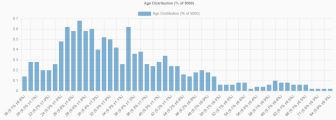
Age Distribution (N of 5000) — Visualizing the demographic composition of New Deal artists.
The Regionalist Triad
Thomas Hart Benton
A Missouri‑born painter whose sweeping murals and dynamic compositions captured the movement, energy, and contradictions of American life.
Grant Wood
The Iowa artist behind American Gothic, known for blending realism with stylized forms, symbolism, and a deep sense of place.
John Steuart Curry
A Kansas painter whose dramatic depictions of rural life reflected both the strength and struggle of the Midwest.
How Regionalist Art Is Made
Regionalist painters approached their work with a deep respect for the land and the people who lived upon it. Their process often began long before the first brushstroke:
- Field Sketching: Artists traveled through farms, towns, and river valleys, sketching scenes directly from life.
- Local Materials: Many used regionally sourced pigments, earth tones, and traditional oil techniques.
- Compositional Mapping: Scenes were arranged to emphasize rhythm, movement, and narrative clarity.
- Memory & Atmosphere: Painters often blended observation with emotional memory — capturing not just what a place looked like, but what it felt like.
- Symbolic Realism: Everyday objects and gestures were elevated into symbols of regional identity.
Example of Modern Regionalist Technique
The following works are presented solely as illustrative examples of modern interpretations of American Regionalism.
While the original Regionalist painters worked in the early 20th century, certain techniques—such as earth‑based palettes, natural pigments, and sculptural forms—can still evoke the atmosphere of the movement today. The following example demonstrates how modern materials like walnut‑hull glaze can create a similar warmth and sense of place without imitating any specific artist.
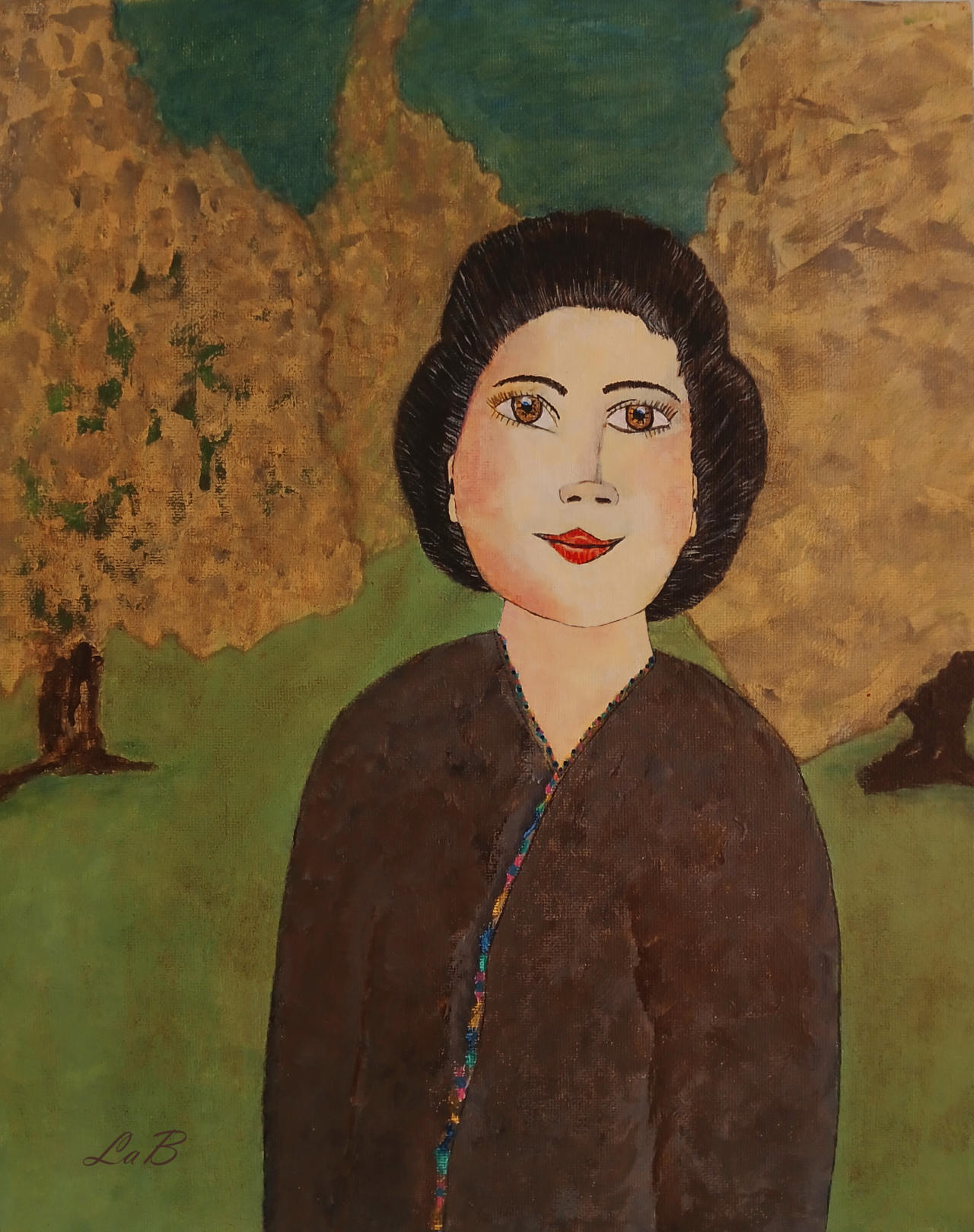
Artist: ClubHeadArt (nom d’artiste) — signed with “LaB” monogram.
Created using walnut‑hull glaze and earth‑based tones to echo the warmth and atmosphere of early American Regionalism.
Another modern interpretation
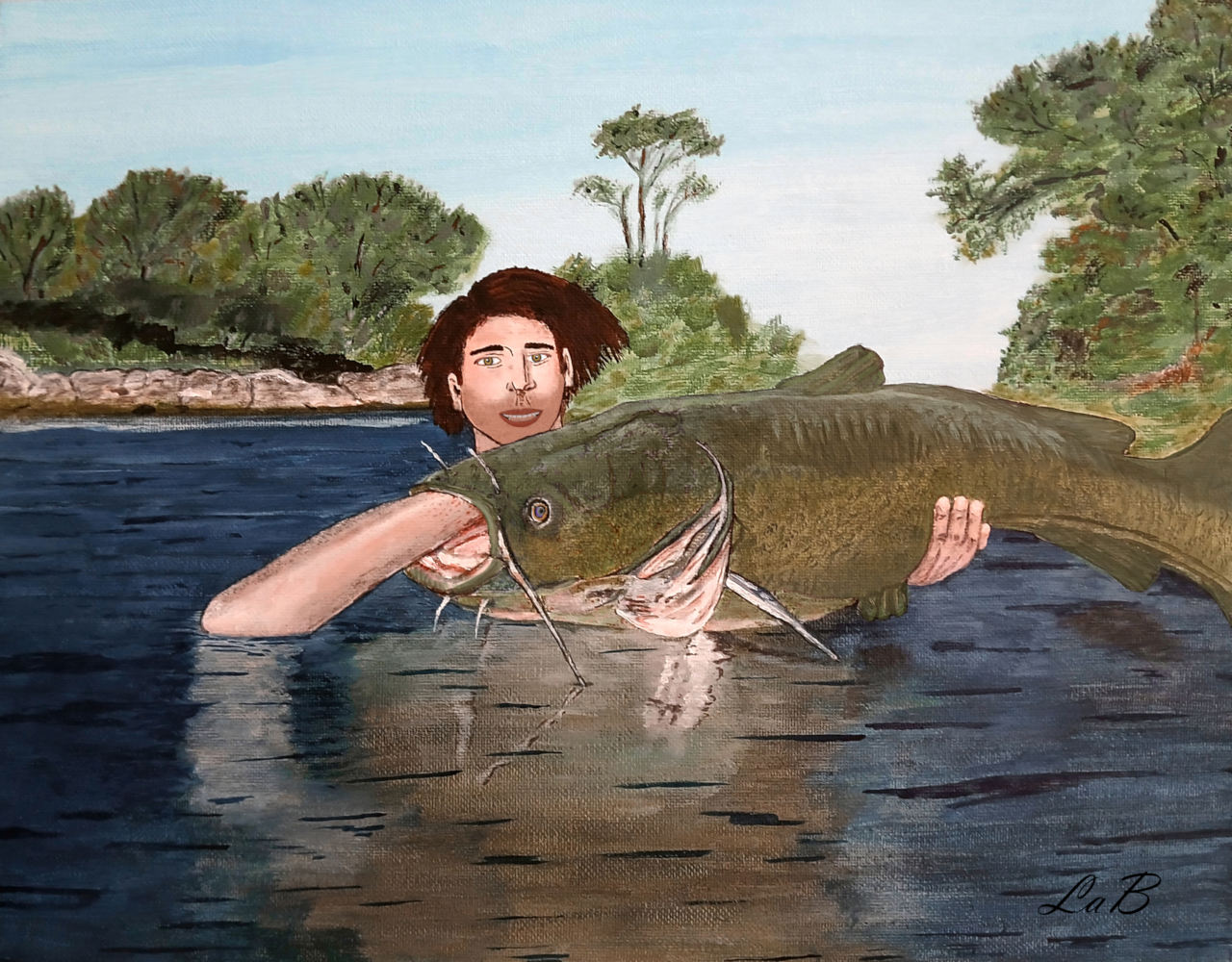
Missouri Noodling (LaB No107)
Artist: ClubHeadArt (nom d’artiste) — signed with the “LaB” monogram.
Presented here as an example of modern American Regionalism, this work illustrates how contemporary artists reinterpret regional ritual with new materials, new sensibilities, and a renewed focus on cultural inheritance.
Missouri and the Heartland Connection
Missouri occupies a central place in the history of American Regionalism. As the birthplace of Thomas Hart Benton and a crossroads of Midwestern culture, the state’s rolling fields, river towns, and working communities shaped much of the movement’s visual language. Its landscapes remain enduring symbols of Regionalism’s spirit.
Missouri also became one of the most active states in the New Deal art programs, with WPA and Section of Fine Arts murals appearing in post offices, schools, and civic buildings across the state. These works helped define the public face of Regionalism and connected local communities to the broader national movement.
Contemporary Regionalism & Predictions
Although the original movement belongs to the early 20th century, its core ideas remain relevant. Contemporary artists explore themes of local identity, regional culture, land‑based storytelling, and the meaning of “place” in an increasingly globalized world.
Predictions:
- Regionalism will continue to grow as artists reject algorithmic sameness and seek authenticity.
- Local galleries and rural art communities will gain renewed cultural importance.
- Missouri will remain a symbolic center of American place‑based storytelling.
- Digital tools (including AI) will help preserve regional history while inspiring new interpretations.
Why Regionalism Matters Today:
Nearly a century after its rise, American Regionalism remains deeply relevant. In an era shaped by globalization, digital culture, and rapid urbanization, many artists and communities are rediscovering the value of local identity, regional storytelling, and the landscapes that shape daily life. Regionalism endures because it offers something timeless: a sense of belonging rooted in place.
Today’s artists continue to explore the same questions that animated Benton, Wood, and Curry — What does it mean to come from here? How does the land shape the people? What stories can only be told in this region?
A Regionalism Renaissance in Missouri:
Contemporary Regionalism is not a revival of old styles, but a renewed interest in authenticity, community, and the emotional truth of local experience. It bridges past and present, reminding viewers that American culture is not monolithic — it is a mosaic of regions, histories, and voices.
Missouri, long a symbolic center of the movement, continues to nurture artists who work directly from the land, towns, and cultural rhythms of the Midwest. Modern creators are expanding Regionalism with new materials, new perspectives, and new technologies — while staying grounded in the spirit of place‑based art.
One example is MissouriArtist.com, a contemporary showcase of artwork created in the very region that shaped Thomas Hart Benton. The site reflects a living continuation of Regionalist values: attention to local landscapes, respect for working communities, and a commitment to telling the stories of Missouri through visual art.
The growing Missouri Artists A–Z archive further preserves this legacy by documenting the painters, muralists, and WPA contributors who shaped the state’s artistic identity. This research connects early 20th‑century Regionalism with the artists who continue to define Missouri’s creative landscape today.
This ongoing creative activity demonstrates that Regionalism is not a closed chapter in American art history — it is a continuing conversation. As long as artists draw meaning from the land beneath their feet, Regionalism will remain alive, evolving, and culturally significant.
References
- Smithsonian American Art Museum — American Regionalism
- The Metropolitan Museum of Art — Thomas Hart Benton
- Art Institute of Chicago — Grant Wood
- Kansas Historical Society — John Steuart Curry
- Missouri Remembers — Artists in Missouri through 1951